
 Save
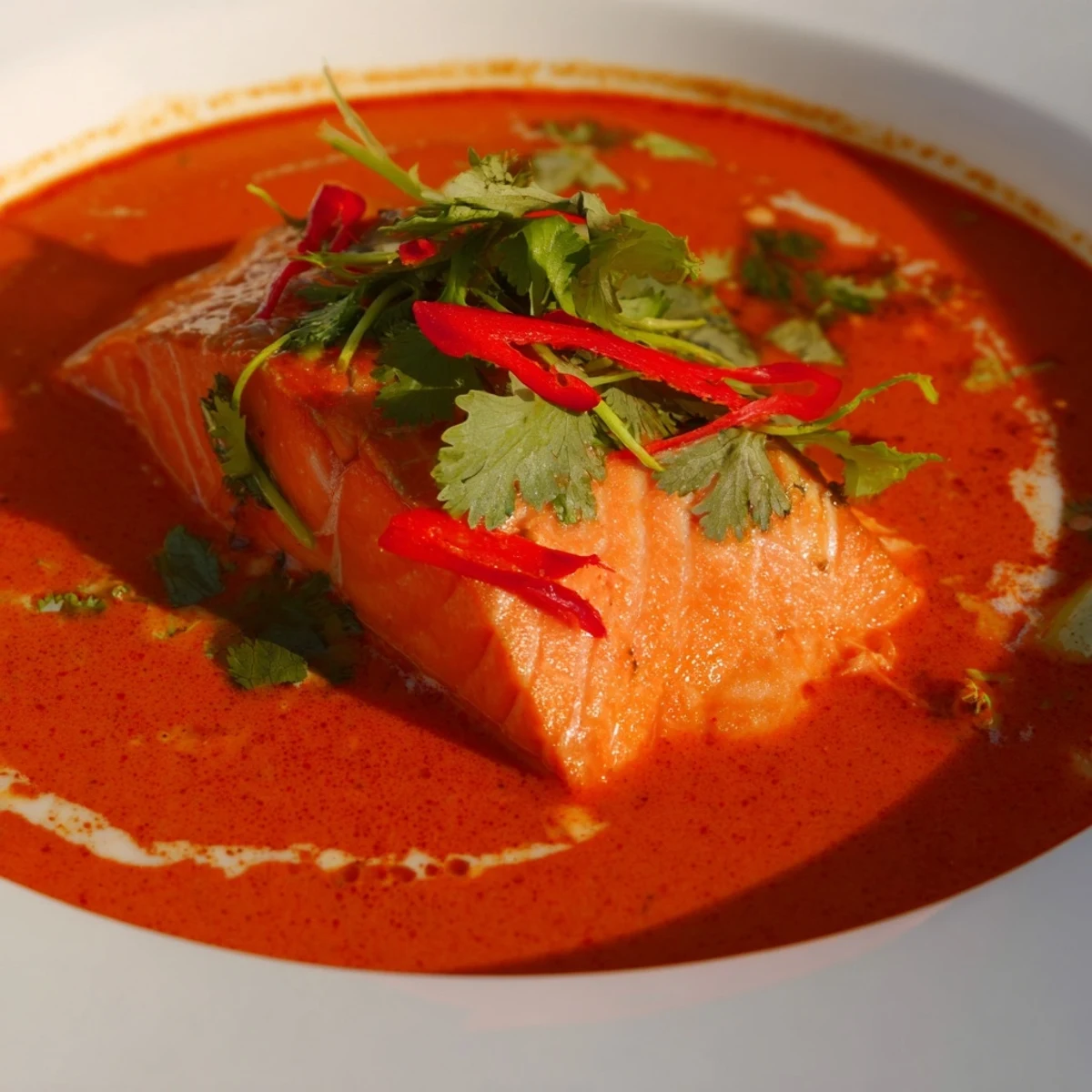
Save This vibrant Thai-inspired dish brings together succulent salmon fillets and a rich, aromatic sauce made with creamy coconut milk and bold red curry paste. The fish gently simmers in the fragrant liquid, absorbing all the complex flavors while staying perfectly tender and moist. Fresh vegetables like bell peppers, sugar snap peas, and red onion add delightful crunch and color to every bite. A generous finishing touch of chopped fresh coriander brightens the entire dish with its citrusy herbal notes. The entire meal comes together in just 35 minutes, making it perfect for busy weeknights when you want something special but don't have hours to spend in the kitchen. Serve over fluffy jasmine rice to soak up every drop of the incredible sauce.
The first time I made this curry, my kitchen smelled like a Bangkok street corner within minutes of the red curry paste hitting the hot oil. I was skeptical about poaching salmon directly in the coconut milk, worried it might turn out heavy or odd, but the way the fish absorbed those aromatic spices completely changed my mind about weeknight seafood dinners.
Last Tuesday, I came home exhausted and threw this together faster than I could have ordered takeout. My roommate actually paused Netflix and came into the kitchen, asking what smelled so incredible, then proceeded to eat two servings and ask when I was making it again.
Ingredients
- Salmon fillets: Skinless works best here so the sauce can penetrate every inch of the fish, but keep portions even so they cook at the same rate
- Red curry paste: This is the flavor backbone, so do not skimp on quality, Thai Kitchen is reliable and widely available
- Coconut milk: Full fat is worth it here for that silky luxurious texture that clings to the salmon
- Fish sauce: Adds that essential savory depth you cannot get from salt alone, a little goes a long way
- Brown sugar: Balances the heat and acidity, creating that addictive sweet and spicy profile
- Lime juice: Brightens everything up and cuts through the richness of the coconut milk
- Red bell pepper and sugar snap peas: Add crunch and color while soaking up that incredible curry sauce
- Fresh coriander: Scatter generously at the end for that burst of herbal freshness that wakes up the whole dish
Instructions
- Wake up the curry paste:
- Heat oil in a large skillet over medium heat, then add the red curry paste and let it sizzle for about a minute until it becomes incredibly fragrant and the oil starts to separate slightly
- Build the coconut sauce:
- Pour in the coconut milk, fish sauce, brown sugar, and lime juice, stirring to combine, then bring everything to a gentle simmer
- Add the vegetables:
- Toss in the sliced red bell pepper, sugar snap peas, and red onion, letting them cook for just 3 to 4 minutes until they are tender but still retain their crunch
- Nestle in the salmon:
- Gently place the salmon fillets into the simmering sauce, cover the skillet, and let them cook for 10 to 12 minutes until the fish flakes easily when tested with a fork
- Balance the flavors:
- Taste the sauce and adjust with more lime juice for brightness or fish sauce for salt, knowing this is your chance to perfect the dish
- Finish with freshness:
- Scatter the chopped coriander and sliced red chili over everything, letting the herbs wilt slightly into the hot sauce
- Plate it up:
- Serve the salmon directly over fluffy jasmine rice, making sure everyone gets plenty of that coconut curry sauce spooned over their portion
 Save
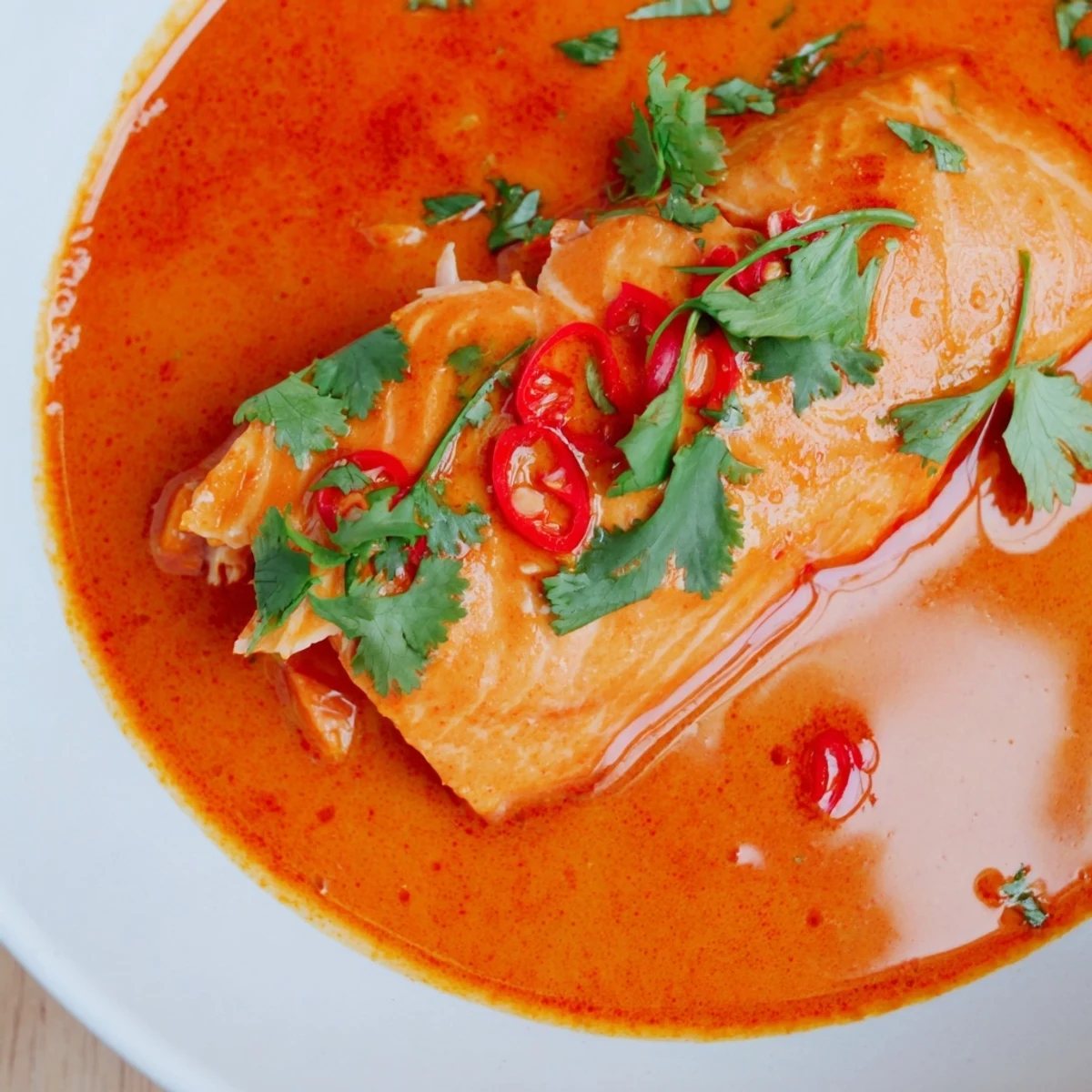
Save This recipe became my go-to for dinner parties after I served it to my parents, who are usually skeptical about fish curry. My dad actually asked for the recipe before he had even finished his first serving, which is basically his highest possible compliment.
Making It Your Own
I have found that green beans work beautifully instead of sugar snap peas when they are out of season, and the way they absorb the curry sauce makes them almost better than the original version.
Perfect Pairings
Cool cucumber salad with rice vinegar on the side cuts through the richness, and a cold crisp white wine like riesling balances the gentle heat perfectly without overwhelming the delicate salmon flavor.
Success Secrets
Having all your vegetables sliced before you start cooking makes the whole process feel effortless and prevents any panic moments when the curry paste is already sizzling in the pan.
- Pat the salmon completely dry before adding it to the sauce
- Let the curry paste cook in oil for the full minute to develop its flavor
- Do not overcrowd the pan or the salmon will steam instead of simmer
 Save
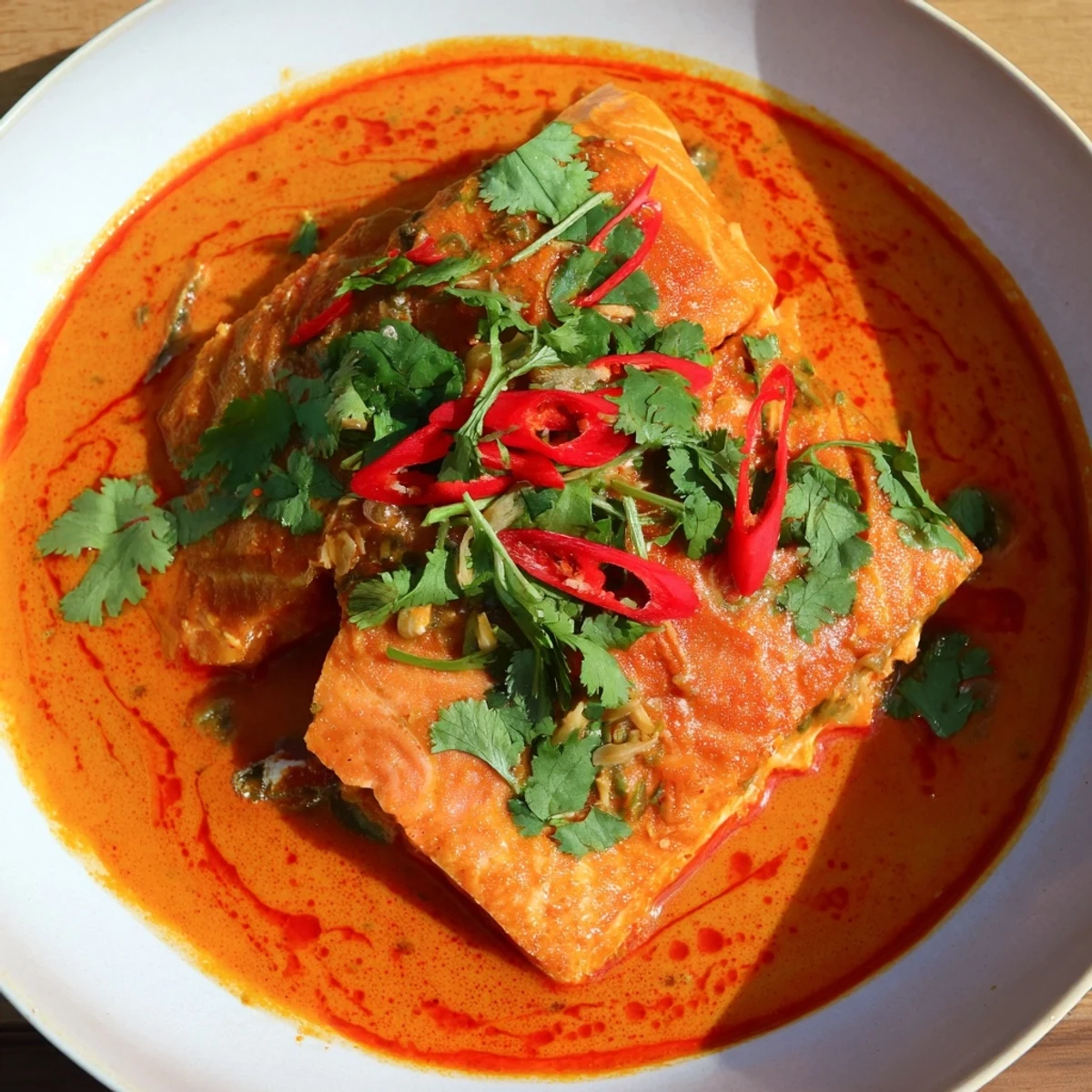
Save There is something deeply satisfying about a dish that tastes like it came from a professional kitchen but comes together with such ease on a busy weeknight.
Common Questions
- → How spicy is this curry salmon?
-
The heat level depends on your red curry paste brand. Thai curry pastes vary significantly in spiciness, so start with less if you're sensitive to heat. You can always add more paste or include sliced fresh chilies as a garnish for those who enjoy extra spice.
- → Can I use frozen salmon fillets?
-
Yes, frozen salmon works perfectly for this dish. Thaw the fillets completely in the refrigerator overnight and pat them dry before adding to the sauce. The gentle simmering method is actually quite forgiving and helps ensure moist results even with previously frozen fish.
- → What vegetables can I substitute?
-
Green beans, broccoli florets, baby corn, or bamboo shoots work wonderfully in place of the sugar snap peas and bell peppers. Snow peas make a great alternative too. Just adjust cooking times slightly—denser vegetables like broccoli may need an extra minute or two in the simmering sauce.
- → Can I make this dairy-free?
-
This dish is naturally dairy-free as it uses coconut milk instead of cream. Just ensure your red curry paste doesn't contain shrimp paste or other non-vegan ingredients if that's a concern. The coconut milk creates the same rich, creamy texture you'd expect from a traditional curry.
- → How do I know when the salmon is done?
-
The salmon is ready when it flakes easily with a fork and the flesh turns opaque throughout. The gentle simmering method usually takes 10-12 minutes depending on fillet thickness. Be careful not to overcook—the salmon will continue cooking slightly in the hot sauce even after you remove the pan from heat.
- → Can I make this ahead?
-
The sauce base can be made a day ahead and stored in the refrigerator. However, for best results, cook the salmon fresh just before serving. Reheating cooked salmon can make it tough and dry. If you need to prep ahead, prepare all your vegetables and sauce components, then finish the dish quickly when ready to eat.
