
 Save
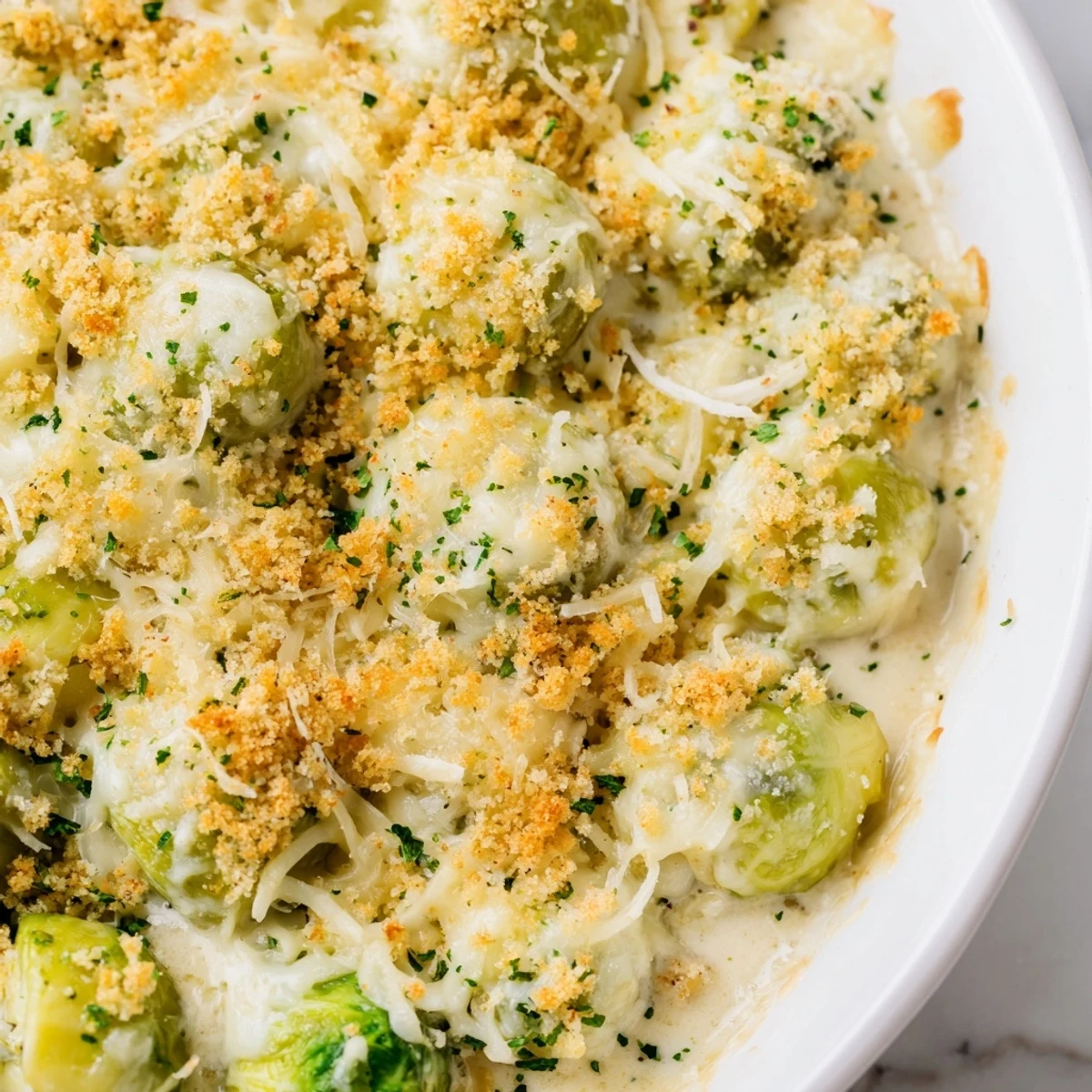
Save This comforting casserole features tender Brussels sprouts enveloped in a rich, velvety Parmesan cream sauce. The dish comes together with a quick blanching of the sprouts, followed by a homemade roux-based sauce enriched with whole milk, heavy cream, Dijon mustard, and warm nutmeg. A generous layer of melted mozzarella and Parmesan creates the perfect cheesy crust, while optional panko breadcrumbs add delightful crunch.
The result is a harmonious blend of earthy Brussels sprouts and indulgent dairy, with the slight bitterness of the sprouts beautifully balanced by the savory, nutty cheese sauce. Perfect for festive holiday tables or as a hearty vegetarian main, this casserole delivers restaurant-quality comfort food with minimal effort.
The smell of butter and onion hitting a hot skillet on a cold Tuesday evening is enough to make anyone believe in comfort food. I threw this casserole together on a whim after finding a forgotten bag of Brussels sprouts buried in the crisper drawer, and now my family requests it more than any potato gratin I have ever attempted. The Parmesan sauce alone is worth making, rich and velvety with a faint whisper of nutmeg that catches people off guard in the best way.
My neighbor Linda stopped by unannounced one November evening while this was bubbling in the oven, and she stood in the kitchen doorway just breathing in the aroma before saying a single word. I sent her home with a generous portion, and she called the next morning to ask for the recipe, which is honestly the highest compliment a home cook can receive.
Ingredients
- Brussels sprouts (1 and a half lbs, trimmed and halved): Smaller sprouts tend to be sweeter and more tender, so pick them when you have the choice.
- Yellow onion (1 medium, finely chopped): The onion builds a sweet aromatic base that anchors the entire sauce.
- Garlic (2 cloves, minced): Fresh garlic makes a noticeable difference here, so skip the jarred version if you can.
- Unsalted butter (2 tbsp): Gives the roux its nutty, rounded foundation without over salting the dish.
- All purpose flour (2 tbsp): Just enough to thicken the liquids into something luxuriously coating.
- Whole milk (1 and a half cups) and heavy cream (1 cup): The combination creates a sauce that is rich but not cloying, with real body.
- Dijon mustard (1 tsp): A quiet background note that sharpens the cheese and balances the richness.
- Salt (half tsp), black pepper (half tsp), ground nutmeg (quarter tsp): Seasoning trio that brings depth, and the nutmeg is the secret weapon here.
- Parmesan cheese (1 and a quarter cups grated, divided): Use the good stuff from a wedge, not the dusty green can, because it melts into the sauce and crisps on top entirely differently.
- Mozzarella cheese (1 cup shredded): Adds creamy stretch and mellow mildness that lets the Parmesan shine.
- Panko breadcrumbs (half cup) and olive oil (1 tbsp): Creates that irresistible golden crunch on top that everyone fights over.
- Fresh parsley (2 tbsp chopped): A bright finishing touch that lifts the whole dish visually and on the palate.
Instructions
- Prepare the oven and dish:
- Heat your oven to 400 degrees F and grease a 9 by 13 inch casserole dish with butter or a light spray so nothing sticks later.
- Blanch the Brussels sprouts:
- Drop the halved sprouts into a large pot of boiling salted water for just 3 to 4 minutes until they yield slightly to a fork, then drain immediately so they do not go mushy.
- Start the aromatic base:
- Melt butter in a large skillet over medium heat, add the chopped onion, and let it soften for about 3 minutes before stirring in the garlic for a quick 30 seconds until fragrant.
- Build the roux:
- Sprinkle the flour over the softened onions and stir constantly for 1 to 2 minutes, letting it cook just long enough to lose that raw flour taste.
- Create the creamy sauce:
- Slowly whisk in the milk and cream, keeping the heat steady, and within about 4 minutes the liquid will thicken into a glossy sauce that coats the back of a spoon.
- Add cheese and seasonings:
- Pull the skillet off the heat and stir in three quarters cup of Parmesan, all the mozzarella, the Dijon mustard, salt, pepper, and nutmeg until everything melts into one smooth mixture.
- Combine and assemble:
- Toss the blanched sprouts in the skillet until every piece is coated, then transfer the entire mixture into your prepared casserole dish, spreading it evenly.
- Add the topping:
- Sprinkle the remaining half cup of Parmesan across the top, then scatter olive oil tossed panko breadcrumbs over that for a crunchy finish.
- Bake until golden:
- Slide the dish into the oven for 25 to 30 minutes until the edges are bubbling and the top is a gorgeous deep gold.
- Rest and serve:
- Let the casserole sit for 5 minutes after removing it from the oven, scatter chopped parsley over the top, and serve it while it is still hot and inviting.
 Save
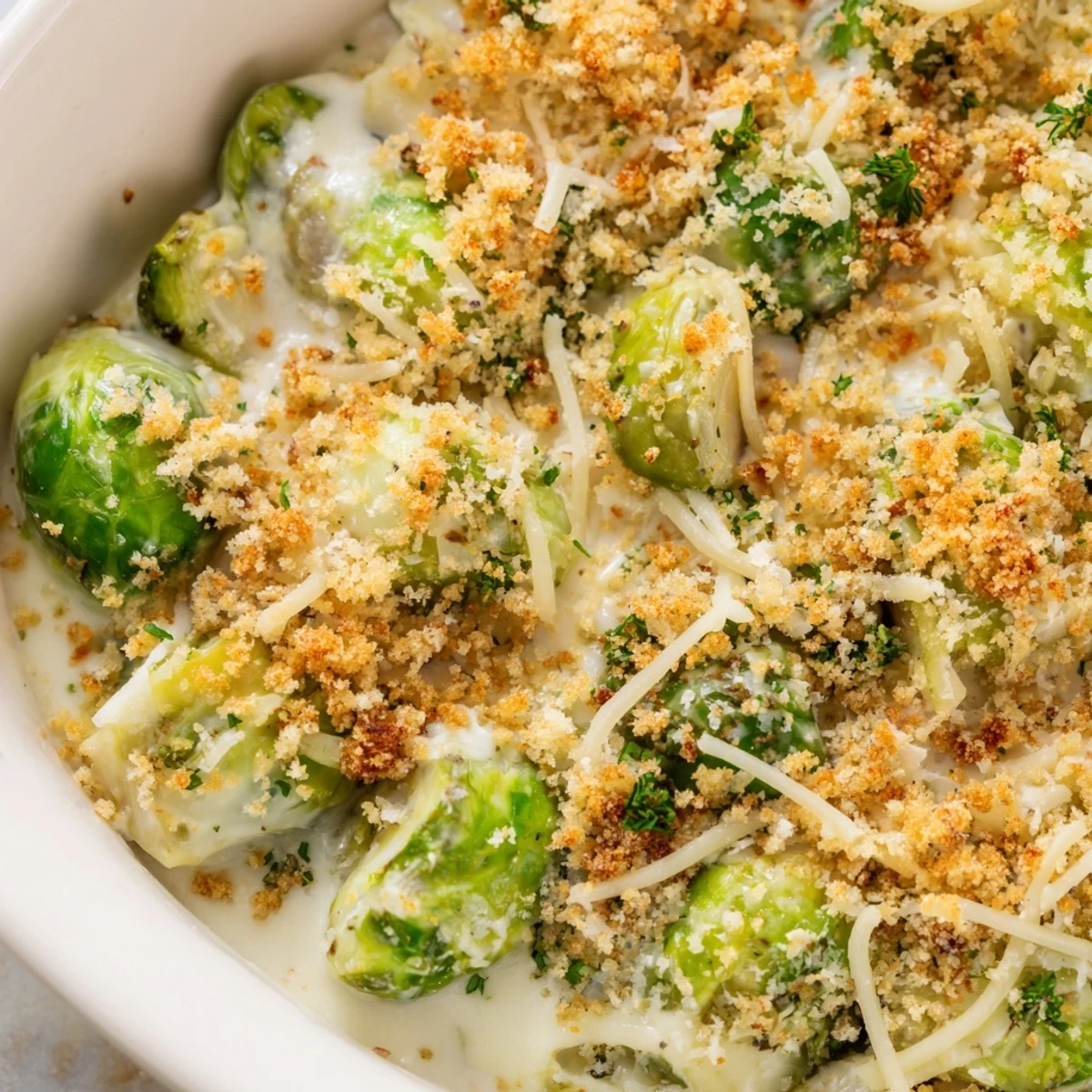
Save There is something about carrying a bubbling, golden topped casserole from the oven to the table that turns an ordinary weeknight into an occasion worth savoring.
What to Serve Alongside
This casserole holds its own as a vegetarian main with a simple green salad and crusty bread on the side, but it also slides comfortably next to roasted chicken, a holiday ham, or even a Thanksgiving turkey without competing for attention. A glass of Chardonnay or a light Pinot Noir alongside turns a casual dinner into something that feels quietly intentional.
Swaps and Variations
Replace the mozzarella with Gruyere for a deeper, slightly nutty character, or use sharp cheddar if you want something bolder and more rustic. Crumbled cooked bacon scattered over the top before baking turns this into an indulgent side that disappears even faster at a gathering, though it will no longer be vegetarian.
Storing and Reheating
Cover leftovers tightly and refrigerate for up to 3 days, reheating individual portions in the oven at 350 degrees F rather than the microwave to preserve that satisfying crunch on top.
- Let the casserole cool completely before covering to prevent condensation from making the topping soggy.
- Freeze individual portions wrapped tightly for up to one month, though the cream sauce may separate slightly upon thawing.
- Always taste and adjust salt after reheating, because cold storage can mute the seasonings.
 Save
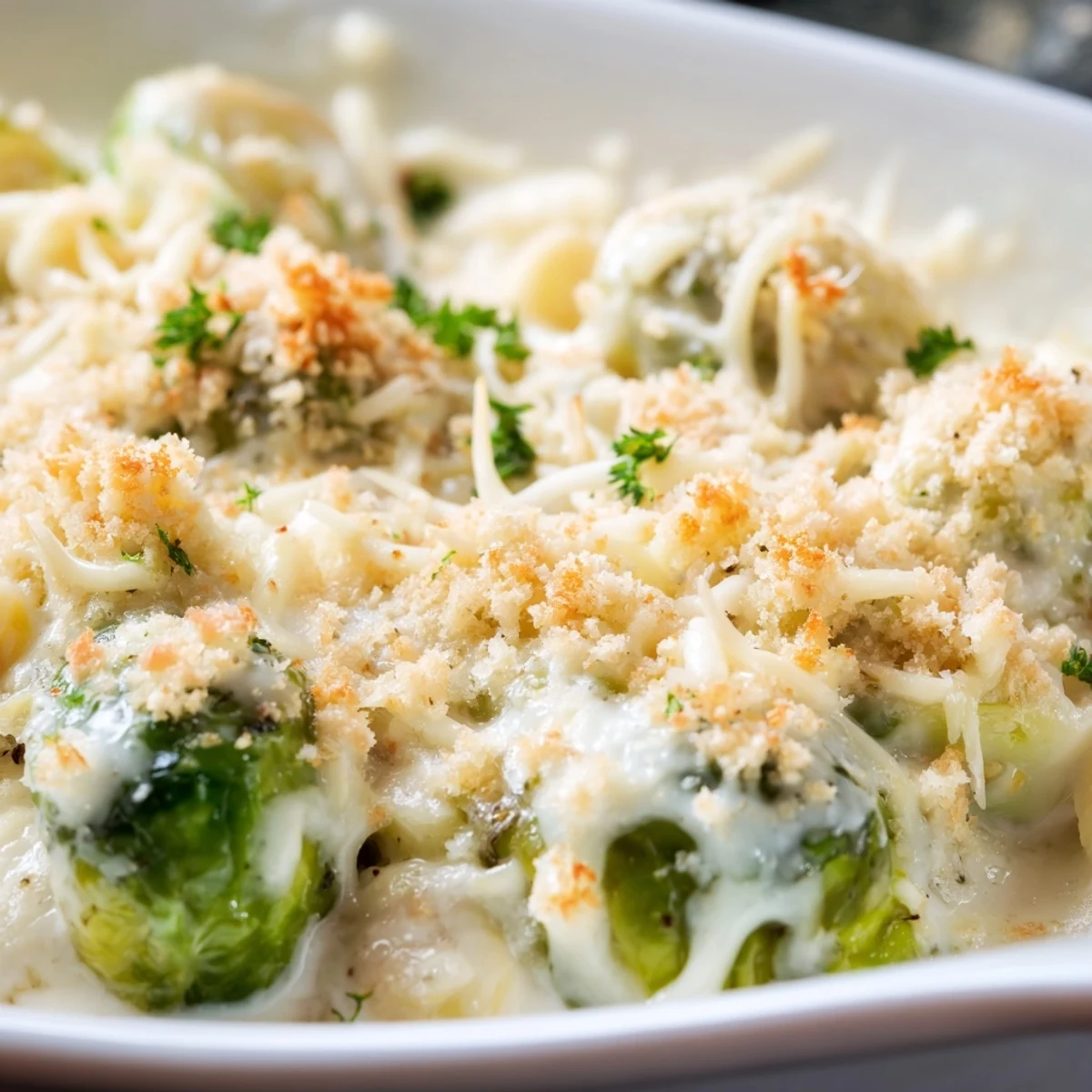
Save Keep this recipe close because once you make it for someone, they will ask for it again and again. A good creamy casserole is a love language all its own.
Common Questions
- → Can I make this casserole ahead of time?
-
Yes, assemble the entire casserole up to 24 hours in advance and refrigerate. Add an extra 10-15 minutes to the baking time if baking from cold. For best results, add the panko topping just before baking to maintain its crunchiness.
- → What other cheeses work well in this dish?
-
Gruyère adds a nutty depth, sharp cheddar provides bold flavor, and Swiss offers mild creaminess. You can also substitute half the Parmesan with aged Gouda for a smoky note or use Fontina for excellent melting properties.
- → How do I prevent the Brussels sprouts from becoming bitter?
-
Blanching the sprouts for 3-4 minutes before baking removes some bitterness. Cutting them in half ensures even cooking, and the creamy cheese sauce naturally balances any remaining bitterness. Avoid overcooking during the blanching stage.
- → Can I make this gluten-free?
-
Substitute all-purpose flour with a 1:1 gluten-free flour blend for the roux. Replace panko breadcrumbs with crushed gluten-free crackers or almond flour mixed with Parmesan for the topping. All other ingredients are naturally gluten-free.
- → How long will leftovers keep?
-
Store leftovers in an airtight container in the refrigerator for 3-4 days. Reheat in a 350°F oven for 15-20 minutes until heated through, or microwave individual portions. The sauce may separate slightly when reheated but will come together when stirred.
- → Can I use frozen Brussels sprouts?
-
Frozen sprouts release more water when cooked, which can make the casserole soggy. If using frozen, thaw completely and pat dry thoroughly before blanching. Reduce the blanching time to 2 minutes since frozen sprouts are partially cooked during processing.
