
 Save
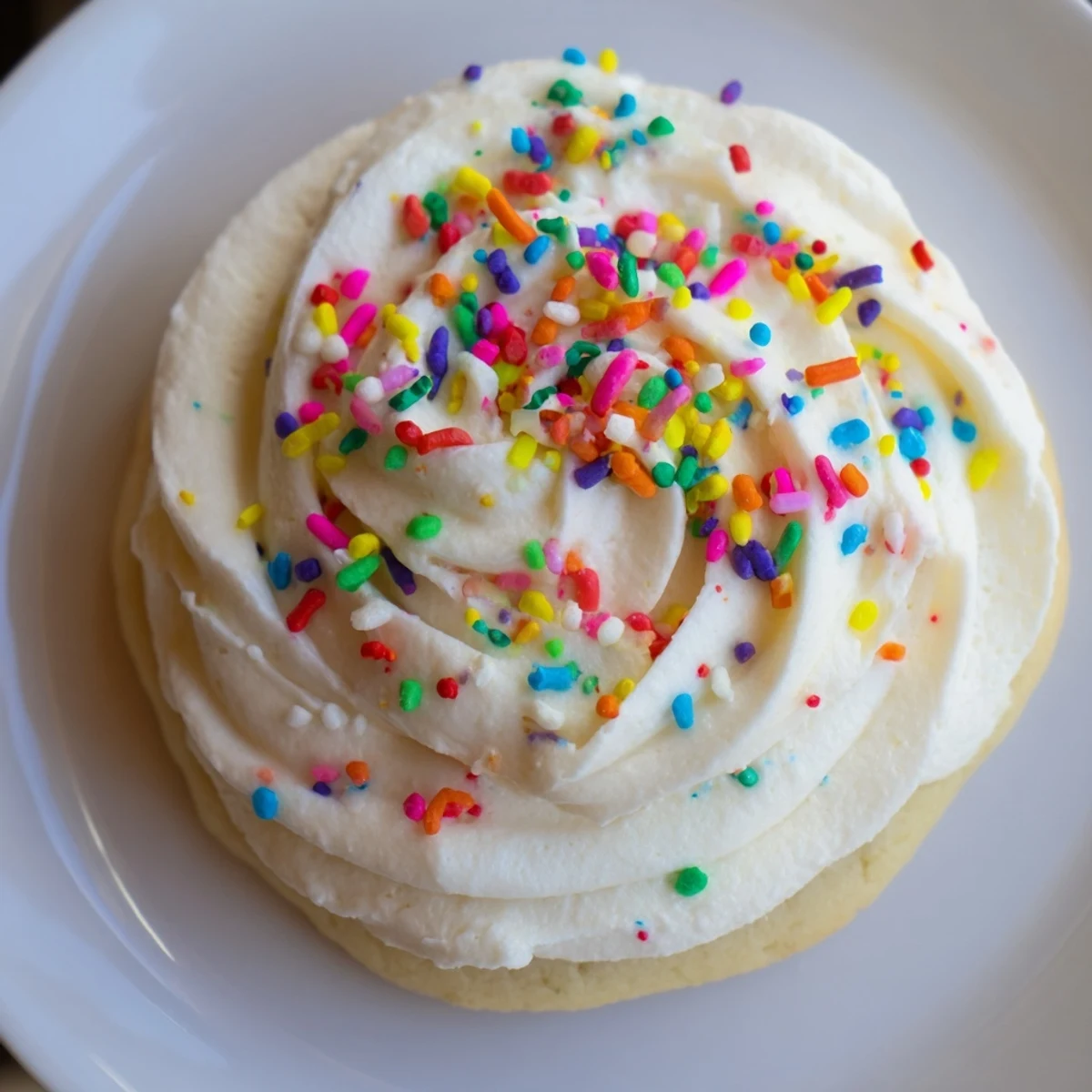
Save Recreate the beloved taste of Walmart bakery sugar cookies right in your own kitchen. These soft, pillowy cookies feature a tender crumb and melt-in-your-mouth texture, crowned with silky buttercream that's both rich and perfectly sweetened. The secret lies in the sour cream, which keeps the dough exceptionally soft and moist, while proper chilling ensures the perfect shape.
You'll love how simple these are to make, and how closely they mirror that nostalgic grocery store flavor everyone remembers. The buttercream whips up incredibly fluffy and pipes beautifully, making these ideal for birthdays, holidays, or any celebration calling for something special.
My college roommate Sarah worked at the Walmart bakery, and she'd come home smelling like vanilla and powdered sugar. She taught me their secret: it's the sour cream that makes those cookies impossibly soft, and I've never made sugar cookies any other way since.
Last summer, my niece turned six and requested 'the pink Walmart cookies' for her birthday. I made thirty-six of them, piped sky-high swirls of buttercream, and watched her face light up when she saw the platter. Sometimes the grocery store memories are the ones that stick hardest.
Ingredients
- 2 3/4 cups all-purpose flour: The foundation; spoon and level it instead of scooping directly to avoid packing
- 1 teaspoon baking powder: Works with the baking soda for that characteristic lift
- 1/2 teaspoon baking soda: Essential for the soft, pillowy texture we're after
- 1/2 teaspoon salt: Balances all that sugar and enhances vanilla
- 1 cup unsalted butter, softened: Leave it out for at least an hour; room temp butter incorporates properly
- 1 1/4 cups granulated sugar: Cream this thoroughly with butter for the signature crackle top
- 1 large egg: Use room temperature for better emulsification
- 2 teaspoons pure vanilla extract: Don't skimp here; it's the primary flavor
- 1/4 cup sour cream: The magic ingredient that creates that bakery softness
- 1 cup unsalted butter, softened: Beat this until it looks like whipped cream before adding anything else
- 3 cups powdered sugar, sifted: Sifting prevents lumps that'll ruin your smooth frosting
- 2 tablespoons heavy cream or milk: Adjust this to reach your perfect piping consistency
- 2 teaspoons pure vanilla extract: Use the good stuff; you'll taste the difference
- Pinch of salt: Cuts the sweetness just enough
- Food coloring and sprinkles: Go wild or keep it classic; both ways feel like childhood
Instructions
- Whisk your dry foundation:
- In a medium bowl, combine flour, baking powder, baking soda, and salt until everything is evenly distributed
- Cream butter and sugar:
- Beat the softened butter and granulated sugar on medium-high for 2 to 3 minutes until the mixture looks pale and fluffy
- Add egg and vanilla:
- Beat in the egg and vanilla until the mixture is smooth and no streaks remain
- Incorporate the sour cream:
- Mix in the sour cream until fully combined; the batter might look slightly curdled but that's normal
- Bring the dough together:
- Gradually add the dry ingredients on low speed, mixing just until a soft dough forms
- Chill for success:
- Divide the dough in half, flatten into discs, wrap tightly, and refrigerate for at least one hour
- Preheat and prepare:
- Heat your oven to 350°F and line two baking sheets with parchment paper
- Roll and cut:
- On a floured surface, roll dough to 1/4 inch thick, cut 2 1/2 inch circles, and arrange 2 inches apart on baking sheets
- Bake until just set:
- Bake for 9 to 11 minutes until edges are set but centers still look slightly soft; they should remain pale
- Cool completely:
- Let cookies sit on baking sheets for 5 minutes before transferring to a wire rack to cool fully
- Make the buttercream:
- Beat butter until creamy, gradually add sifted powdered sugar, then mix in vanilla, salt, and cream until fluffy
- Frost and decorate:
- Spread or pipe frosting generously onto cooled cookies and top with sprinkles if desired
 Save
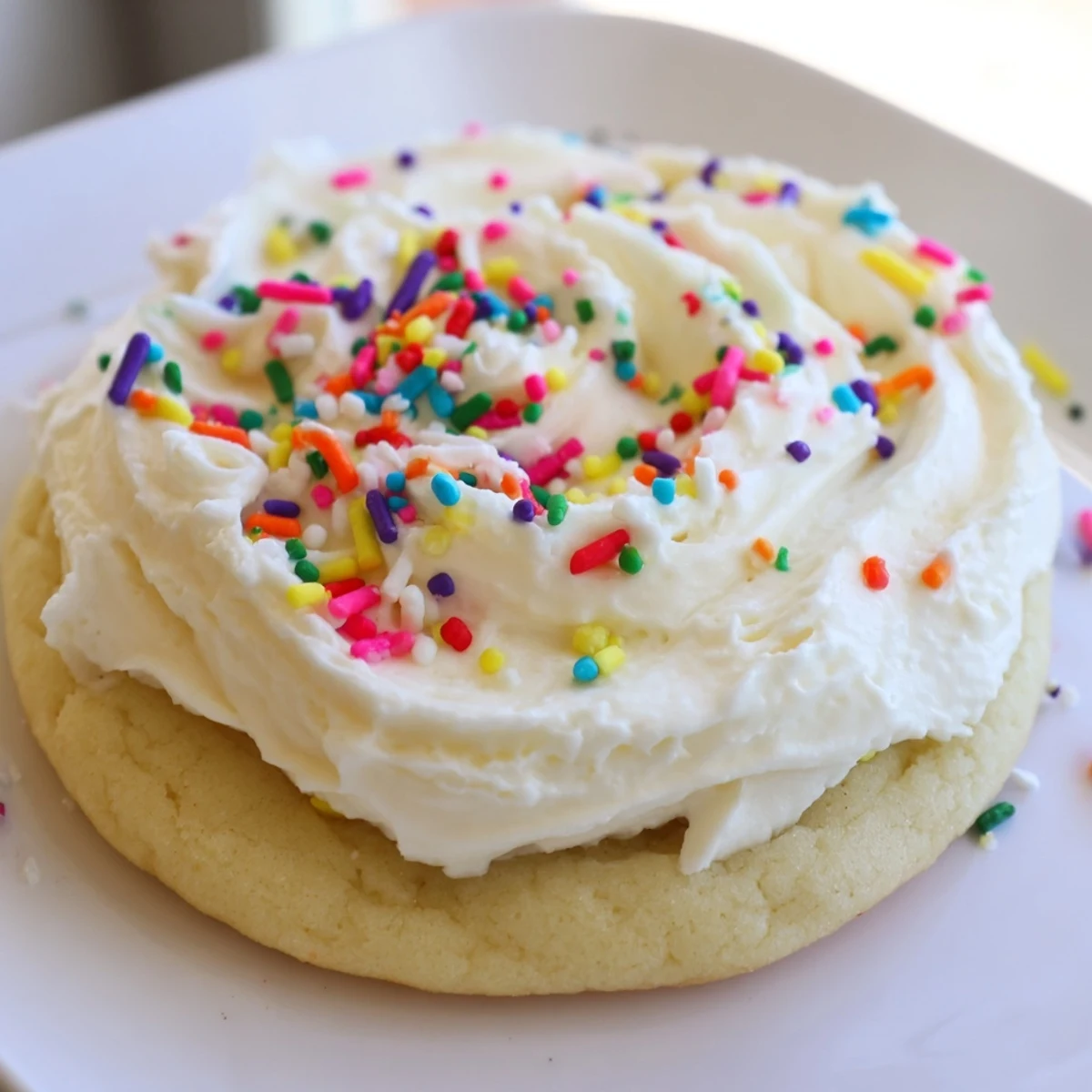
Save My three-year-old insisted on helping frost these last Christmas, and there was pink buttercream in her hair, on the ceiling, somehow on the dog. The cookies looked like a disaster, but they disappeared first from the platter. Sometimes the messy ones taste best anyway.
Getting The Perfect Frosting Consistency
I've learned that frosting thickness is personal preference. Some days I want a thin glaze, others I'm going for those tall bakery swirls. Start with less cream and add more drop by drop until it feels right for your piping bag.
Storage Secrets
These cookies actually taste better on day two. The frosting softens the cookie tops slightly, creating this perfect cake-cookie hybrid that I didn't know I needed until accidentally leaving some out overnight.
Making Them Your Own
The base recipe is a canvas. I've added lemon zest in spring, swapped almond extract for vanilla during the holidays, and even folded crushed candy canes into the frosting. The classic never disappoints, but variations keep things interesting.
- Try adding a drop of almond extract to the frosting for that nostalgic bakery taste
- Freeze unfrosted cookies between parchment sheets for up to three months
- Let dough sit at room temperature for 10 minutes before rolling if it's too firm
 Save
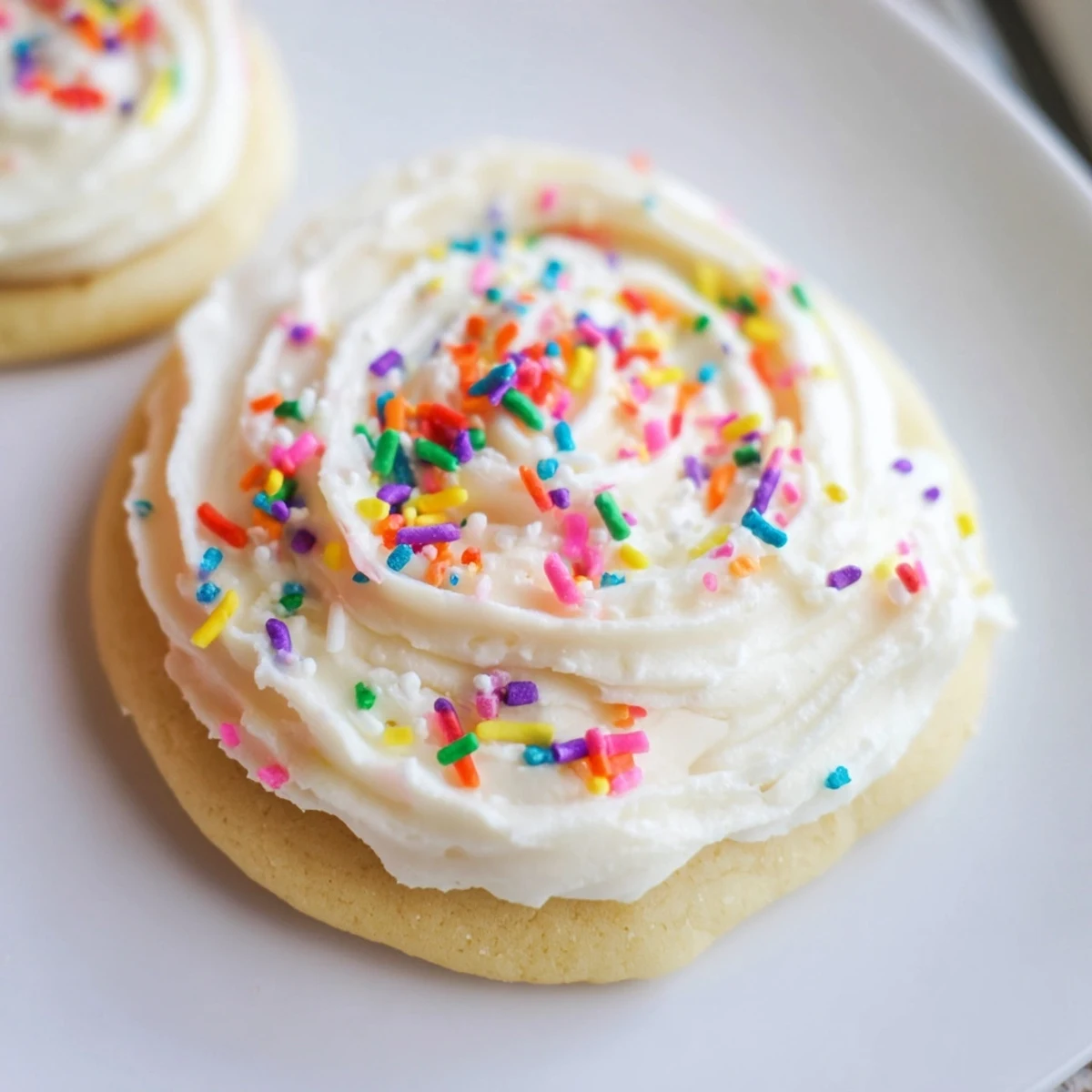
Save These cookies have traveled to countless bake sales, office parties, and birthday celebrations. Something about that familiar taste reminds people of being little, and that's worth every minute of prep time.
Common Questions
- → Why do I need to chill the dough?
-
Chilling the dough for at least one hour firms up the butter, preventing the cookies from spreading too thin while baking. This step is essential for achieving that thick, soft texture and maintaining the circular shape. You can chill the dough overnight for even better results.
- → Can I make these cookies ahead of time?
-
Absolutely. The dough discs can be wrapped and refrigerated for up to 3 days or frozen for up to 3 months. Thaw frozen dough in the refrigerator before rolling. Once baked and frosted, store in an airtight container at room temperature for 3 days, or refrigerate for up to a week.
- → How do I know when the cookies are done baking?
-
The cookies are ready when the edges are just set and the centers still look slightly soft. They should remain pale without any golden browning. Overbaking will result in crisp cookies rather than the desired soft texture. They'll continue setting as they cool on the baking sheet.
- → Can I use salted butter instead of unsalted?
-
You can substitute salted butter, but reduce the added salt in both the cookie dough and frosting by about half. Keep in mind that different brands of salted butter vary in salt content, so you may need to adjust slightly to taste. Unsalted butter gives you more control over the final flavor balance.
- → What's the best way to frost these cookies?
-
Ensure cookies are completely cool before frosting to prevent melting. Use an offset spatula for smooth spreading, or transfer the buttercream to a piping bag fitted with a large star tip for that classic bakery swirl. Room temperature frosting spreads most easily. If the buttercream feels too stiff, let it warm slightly or add another teaspoon of cream.
- → Why add sour cream to cookie dough?
-
Sour cream adds moisture and tenderness while contributing a subtle tang that balances the sweetness. The acidity also activates the baking soda, helping the cookies rise properly. This ingredient is key to achieving that ultra-soft, cake-like texture reminiscent of bakery-style treats.
