
 Save
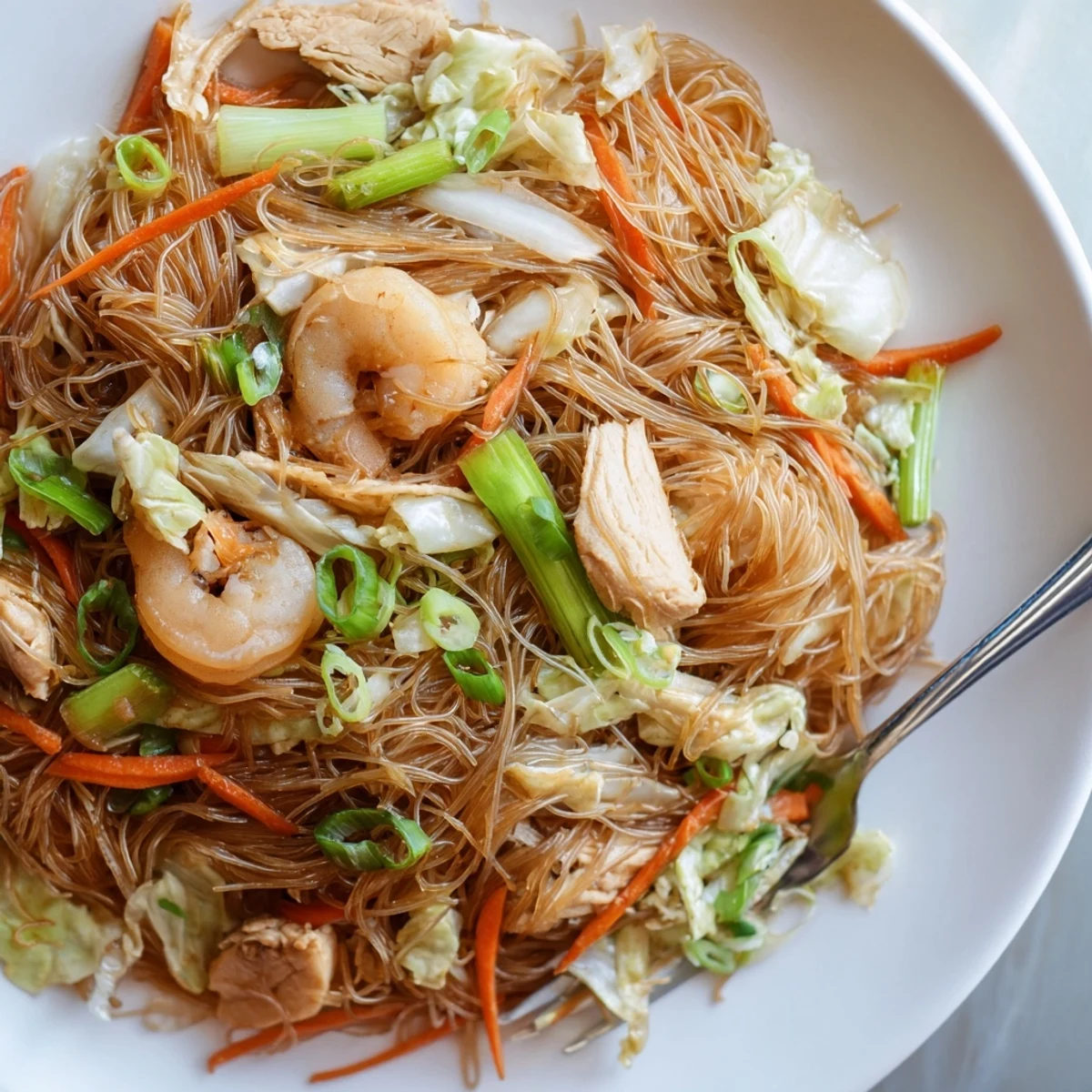
Save This classic Filipino dish features delicate rice vermicelli noodles wok-tossed with sliced chicken breast, succulent shrimp, and julienned vegetables. The noodles absorb a savory blend of soy sauce, oyster sauce, and aromatic chicken broth, creating that signature umami-rich flavor. Perfect for family gatherings or weeknight dinners, this hearty stir-fry comes together in just 40 minutes and serves four generously. Garnish with fresh scallions and serve with calamansi wedges for a bright, citrusy finish that cuts through the richness.
The scent of garlic and onions hitting hot oil instantly transports me back to my aunt's cramped kitchen in Manila, where she'd commandeer a massive wok over a propane tank on her balcony. Sunday mornings meant pancit, and she insisted the secret was in the wrist motion when tossing those delicate rice noodles just so they'd drink up every drop of sauce without turning to mush.
Last summer, I made this for my roommates during a terrible rainy week, and something about the steaming platter of savory noodles with that bright squeeze of calamansi made everything feel cozy and right again. We ate standing up around the kitchen counter, nobody wanting to bother with proper plates.
Ingredients
- 200 g boneless chicken breast, thinly sliced: Cutting against the grain keeps these tender strips from turning rubbery in the high heat
- 100 g medium shrimp, peeled and deveined: Fresh shrimp release a sweetness that balances the salty soy sauce beautifully
- 200 g dried bihon rice vermicelli noodles: These thin noodles absorb flavor like nobody's business but overcook in seconds
- 1 small carrot, julienned: Adds a subtle sweetness and crunch that cuts through the rich sauce
- 1 cup green cabbage, shredded: My aunt swore cabbage was the vegetable that made pancit taste authentic
- 1/2 cup snow peas, trimmed and halved: Their snap stays intact even after the wok's intense heat
- 1 small onion, sliced: The foundation of so many Filipino dishes, it mellows into sweetness
- 3 cloves garlic, minced: More is never wrong unless you are meeting someone important afterward
- 2 tbsp soy sauce: The backbone of that deep umami flavor we all crave
- 1 tbsp oyster sauce: My secret weapon for that restaurant quality richness
- 1 tsp fish sauce: Just enough to make people wonder what that magical something is
- 1/2 tsp ground black pepper: A gentle warmth that lingers pleasantly
- 1 cup chicken broth: Homemade is best but store bought works in a pinch
- 2 tbsp chopped scallions: Fresh onion on top adds brightness and color
- 1 lemon or calamansi, cut into wedges: The acid that cuts through all the rich savory flavors
Instructions
- Soak the noodles:
- Submerge those stiff bihon noodles in warm water for exactly 10 minutes while you prep everything else. They should be pliable but still have some bite to them.
- Build your flavor base:
- Heat 2 tablespoons of oil in your largest wok or skillet until it shimmers. Toss in your minced garlic and sliced onion, stirring until they're fragrant and the onion turns translucent.
- Cook the proteins:
- Add your chicken slices first, letting them develop a light golden color before tossing in the shrimp. Once the shrimp turn pink, about 2 minutes, pull everything out and set it aside.
- Stir fry the vegetables:
- In that same flavorful pan, toss in your carrots, cabbage, and snow peas. Keep them moving for 2 to 3 minutes until they're just tender but still retain their crunch.
- Create the sauce:
- Return your cooked chicken and shrimp to the pan. Pour in the soy sauce, oyster sauce, fish sauce, and chicken broth. Let everything bubble gently for a minute.
- Add the noodles:
- Gently lay your drained noodles on top and use tongs to lift and fold them through the sauce. They'll start absorbing all that liquid and turning glossy.
- Finish and season:
- Cook for 3 to 4 minutes until the noodles are heated through and have soaked up most of the sauce. Sprinkle with black pepper and taste, adjusting if needed.
- Plate and serve:
- Mound everything onto a serving platter and scatter those fresh scallions on top. Set out the lemon wedges so everyone can add their own bright squeeze of acid.
 Save
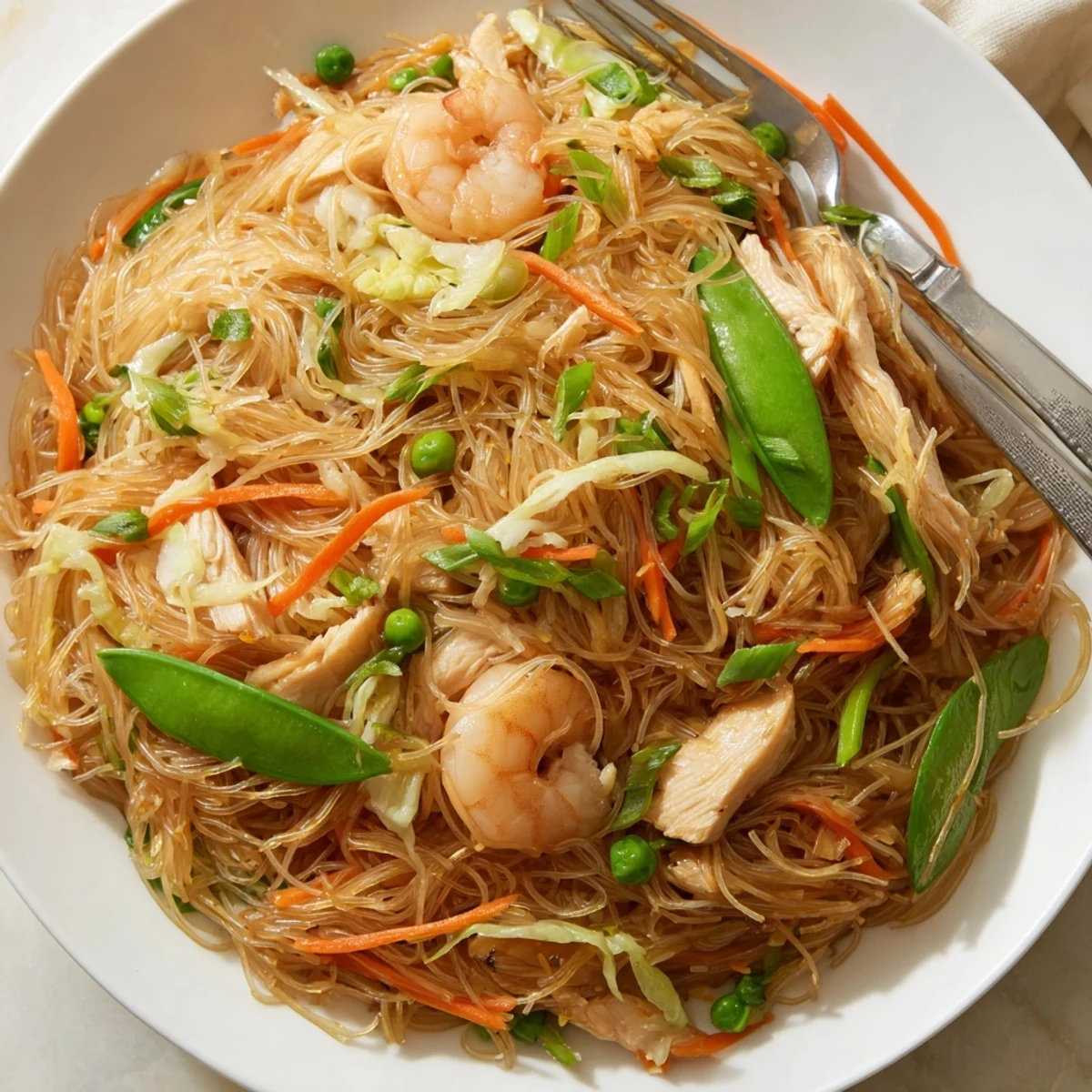
Save My friend Lila once told me that the pancit I made for her birthday dinner tasted like home, even though she had grown up in Ohio and never visited the Philippines. That is the magic of this dish somehow it speaks a language everyone understands.
Getting The Noodles Right
I once skipped the soaking step thinking I could just cook the dry noodles directly in the sauce. What I ended up with was a clumpy mess that stuck to everything. Now I treat that 10 minute soak as sacred meditation time where I get everything else ready.
Make It Your Own
My aunt used whatever vegetables she had on hand, and sometimes that meant bell peppers or celery found their way into the wok. The beauty of pancit is its flexibility, as long as you keep the core seasonings intact.
The Art Of Wok Cooking
High heat is your friend here, but do not let your pan get so hot that the garlic burns before the onion cooks. A wok is ideal but any large skillet will work if you keep the ingredients moving.
- Preheat your pan while you prep to save precious minutes
- Work in batches if your pan is not big enough for everything
- Keep a small bowl of water nearby to deglaze if things start sticking
 Save
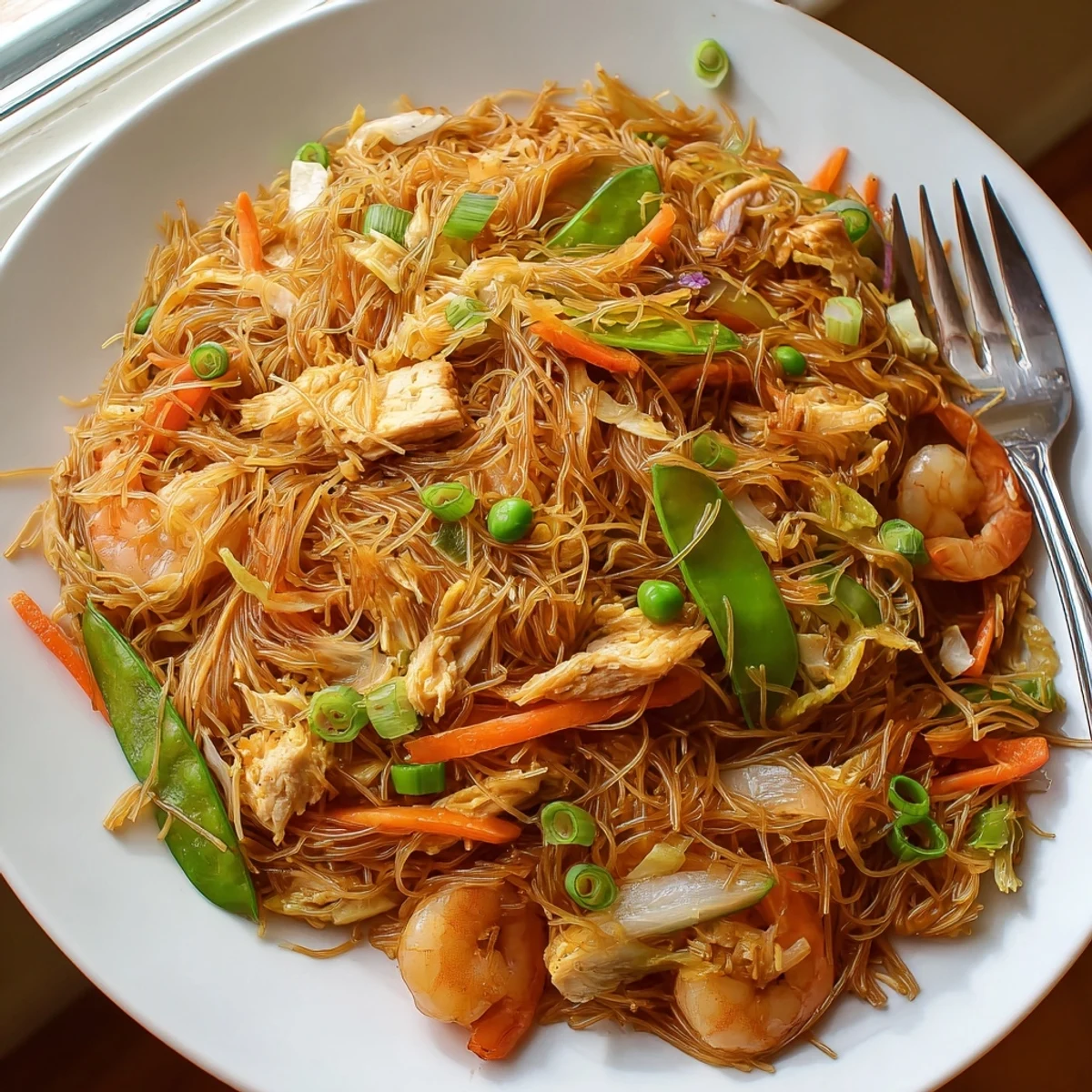
Save There is something deeply satisfying about plating a steaming mound of pancit and watching everyone gather round with forks in hand. Good food does not need to be complicated.
Common Questions
- → What makes Pancit Bihon different from other noodle dishes?
-
Pancit Bihon uses thin rice vermicelli noodles that become translucent when cooked, absorbing the savory sauce beautifully. Unlike wheat-based noodles, bihon has a delicate texture and naturally gluten-free properties when paired with gluten-free soy sauce.
- → Can I prepare this dish ahead of time?
-
Yes, you can slice vegetables and proteins in advance. However, cook the noodles just before serving as they continue absorbing liquid and may become mushy. Store prepared components separately in the refrigerator.
- → What proteins work best in this stir-fry?
-
Chicken breast and shrimp are traditional, offering quick cooking times and mild flavors that complement the savory sauce. Pork belly, beef strips, or tofu make excellent alternatives based on preference or dietary needs.
- → How do I prevent rice noodles from breaking apart?
-
Soak noodles in warm water until pliable but not mushy, about 10 minutes. Handle gently with tongs when tossing in the wok. Avoid overcooking once added to the sauce mixture.
- → What vegetables can I add to customize this dish?
-
Bell peppers, celery, mushrooms, bok choy, or snap peas work wonderfully. Add longer-cooking vegetables like carrots with the aromatics, while delicate greens like cabbage go in near the end.
- → Is there a vegetarian version of Pancit Bihon?
-
Absolutely. Replace chicken with firm tofu cubes and shrimp with shiitake mushrooms. Use vegetable broth instead of chicken, and ensure your fish sauce substitute or soy sauce is vegetarian-friendly.
