
 Save
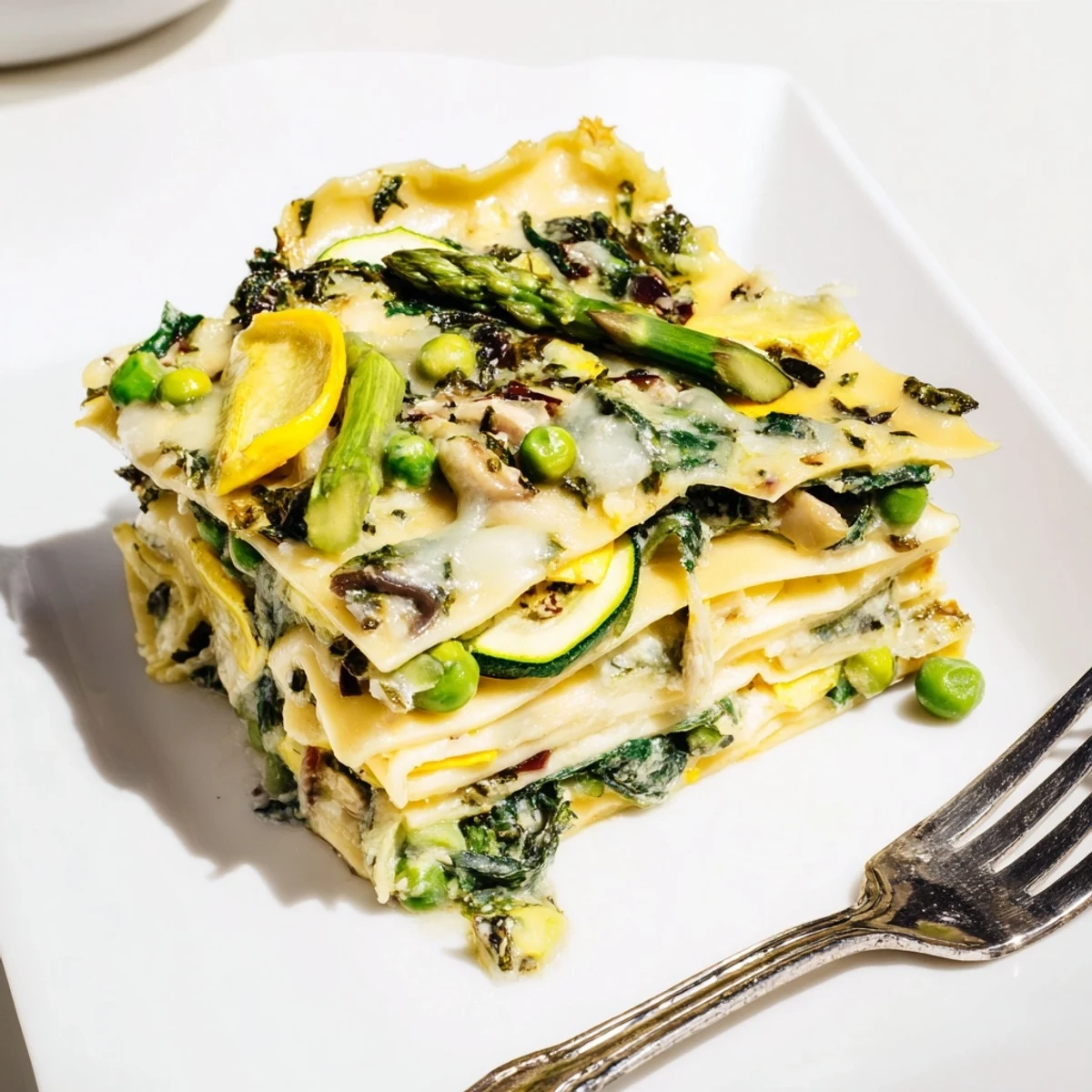
Save This layered spring vegetable lasagna combines tender zucchini, asparagus, peas, and spinach with a smooth béchamel sauce for a creamy texture. Layers of ricotta, mozzarella, and Parmesan cheeses enrich the dish, balanced by savory sautéed leeks and garlic. Prepared with no-boil noodles and baked until golden and bubbling, it offers a fresh twist on classic comfort flavors. Ideal for a medium-difficulty Italian main course, it serves six with a perfect harmony of fresh produce and rich dairy.
The first time I made this lasagna, it was snowing outside but I was determined to bring spring to my kitchen. I had raided the farmers market earlier that morning, coming home with arms full of bright green vegetables and the kind of optimism that only exists before you start layering lasagna noodles. My roommate walked in midway through assembly and asked why I was making comfort food in April. When she tasted it later that evening, standing over the counter with a fork and no plate, she understood completely.
I served this at my first proper dinner party in my new apartment, nervous about everything from the wine pairing to whether my oven actually worked. One guest, who swore she hated vegetables, went back for thirds and asked for the recipe before she even put on her coat. That night felt like proof that simple ingredients treated with care can turn strangers into friends.
Ingredients
- Medium zucchini, thinly sliced: Buy ones that feel heavy for their size and slice them as evenly as possible so they cook at the same rate
- Medium yellow squash, thinly sliced: These add sweetness and color that balances the earthier vegetables beautifully
- Asparagus, trimmed and cut: Snap the bottoms off where they naturally break, not at an arbitrary point, to avoid woody ends
- Baby spinach, chopped: Fresh spinach wilts down to almost nothing, so do not be afraid to use a generous handful
- Peas (fresh or frozen): Fresh peas are worth seeking out in spring, but frozen work perfectly well and are often sweeter
- Medium leek, white parts only: Leeks hide grit between their layers, so slice them lengthwise first and swish them in cold water
- Olive oil: Use a neutral, fruity olive oil that will not overpower the delicate vegetables
- Garlic cloves, minced: Let the garlic sit for a few minutes after mincing to develop its full flavor
- Salt and freshly ground black pepper: Taste your vegetables as they cook, remembering you will also salt the sauce and cheese layers
- Ricotta cheese: Whole milk ricotta makes a difference here, giving each layer richness without being greasy
- Grated Parmesan cheese: Buy a wedge and grate it yourself for better melting and a more complex flavor
- Shredded mozzarella cheese: Low moisture mozzarella will prevent your lasagna from becoming soupy
- No-boil lasagna noodles: These absorb excess moisture from the vegetables while cooking, which is actually ideal here
- Unsalted butter: Control your salt level by starting with unsalted butter in the béchamel
- All-purpose flour: This thickens the sauce and creates that silky restaurant texture
- Whole milk, warmed: Cold milk can cause lumps when you whisk it into the roux, so warm it slightly first
- Ground nutmeg: Just a pinch adds warmth and depth that makes people ask what your secret ingredient is
- Salt and white pepper: White pepper disappears into the sauce, so you get flavor without visible specks
Instructions
- Prepare your oven and pan:
- A 375°F oven gives you that golden, bubbling top without drying out the vegetables, and greasing your dish thoroughly will prevent sticking later
- Soften the aromatics:
- Cooking the leeks and garlic first builds a flavor foundation, so take your time and let them become translucent and fragrant
- Cook the vegetables in batches:
- Crowding the pan will steam instead of sauté, so give the vegetables room and do not rush this step or you will end up with watery lasagna
- Make the béchamel sauce:
- Whisk constantly and be patient with the milk, because smooth sauce is worth the arm workout and the nutmeg will bloom beautifully in the hot milk
- Mix the ricotta layer:
- Combining the ricotta with Parmesan before spreading makes it easier to distribute evenly across the noodles
- Layer thoughtfully:
- Start with sauce so the noodles do not stick, then repeat your layers, ending with plenty of sauce and cheese on top to prevent dry edges
- Bake covered then uncovered:
- The foil traps steam to cook the noodles through, then removing it lets the cheese develop that gorgeous golden brown crust everyone fights over
- Let it rest:
- Waiting ten minutes feels impossible, but this step is crucial for clean slices and allows the flavors to settle
 Save
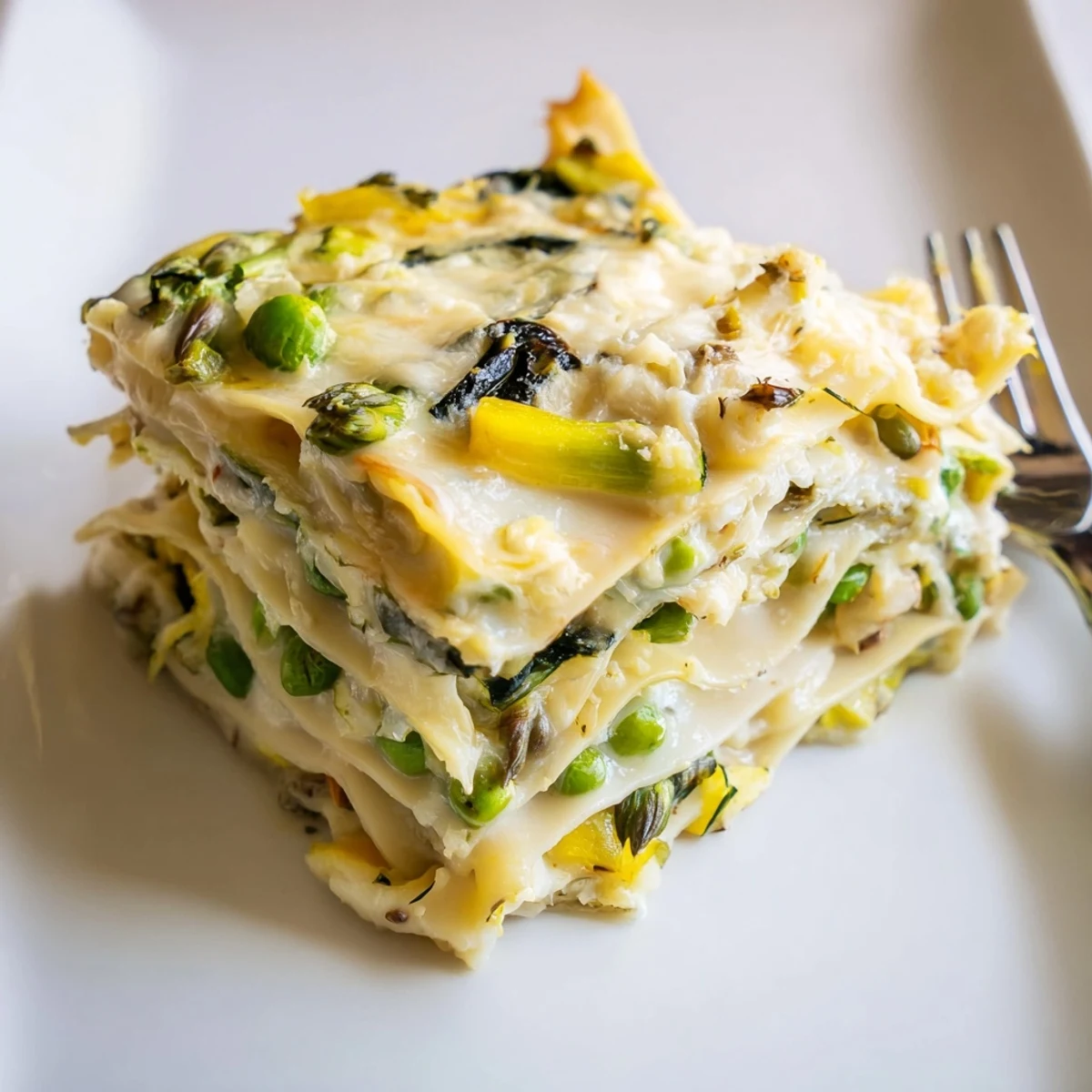
Save This recipe has become my go-to for friends who swear they do not like vegetables, and it never fails to win them over. Something about the layers of creamy sauce and tender vegetables feels like a hug that happens to be nutritious too.
Getting Ahead
You can assemble the entire lasagna up to a day ahead, cover it tightly, and refrigerate until you are ready to bake. This actually improves the flavor because the vegetables have time to mingle with the sauce.
Vegetable Swaps
Spring is flexible, so use whatever looks best at the market. Fava beans, artichoke hearts, or even blanched green beans work beautifully here. The key is keeping everything cut to similar sizes so they cook evenly.
Make It Your Own
A handful of fresh basil or torn parsley added between layers brings a bright, herbal punch that cuts through the rich sauce. You can also add a layer of prosciutto for a salty contrast if you want to stray from vegetarian.
- Grate some lemon zest over the top during the last five minutes of baking for a surprising brightness
- A drizzle of good olive oil right before serving makes each bite feel luxurious
- Let guests add red pepper flakes at the table so the heat level stays in their control
 Save
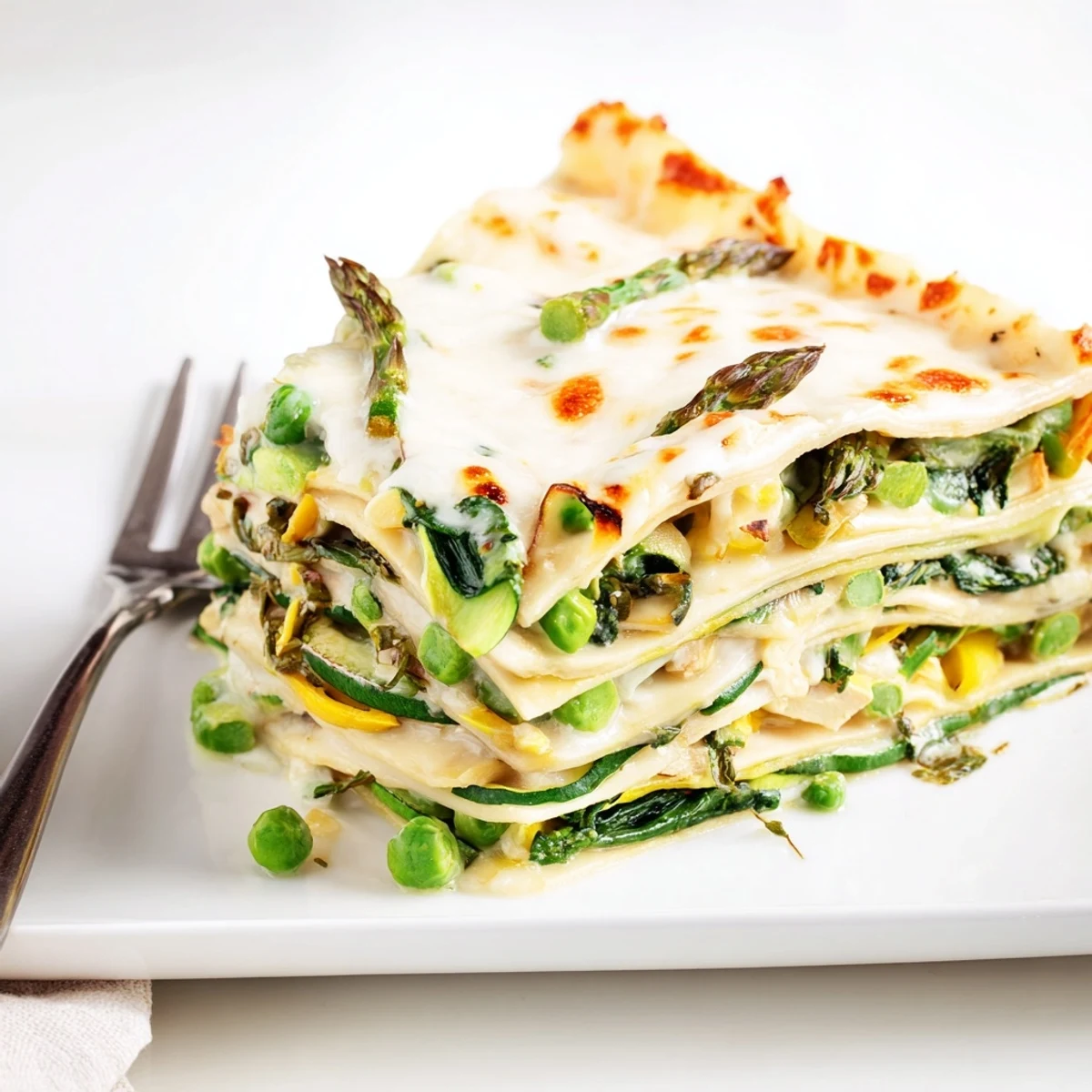
Save This lasagna tastes even better the next day, if such a thing is possible, and makes your entire house smell like a welcoming Italian kitchen. Enjoy every forkful.
Common Questions
- → What vegetables are used in this lasagna?
-
Zucchini, yellow squash, asparagus, baby spinach, peas, and leeks are sautéed to bring freshness and texture.
- → How is the white sauce prepared?
-
The béchamel is made by melting butter, whisking in flour, then gradually adding warm milk and seasoning with nutmeg, salt, and white pepper until thickened.
- → Can I use regular lasagna noodles instead of no-boil?
-
Yes, regular noodles should be cooked according to package instructions before layering to ensure proper texture.
- → What cheeses complement the vegetable layers?
-
Ricotta mixed with Parmesan is layered with shredded mozzarella to add creaminess and flavor balance.
- → Are there suggested herbs to enhance flavor?
-
Fresh basil or parsley can be added for an extra burst of herbaceous aroma and taste.
- → How long should the lasagna rest after baking?
-
Allow the dish to rest for about 10 minutes before slicing to let the layers set and improve serving consistency.
