
 Save
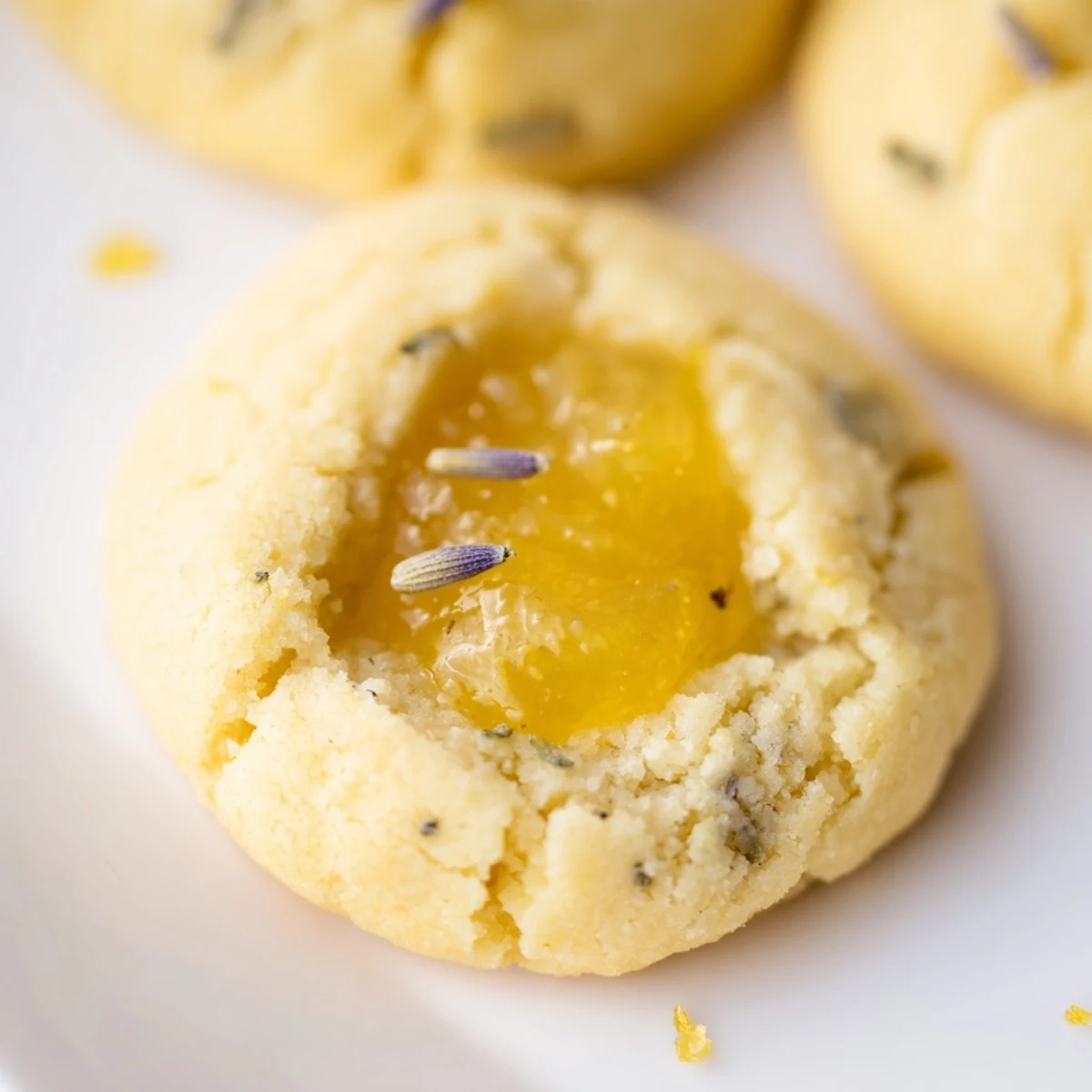
Save These delicate thumbprint cookies feature a tender, buttery base infused with finely chopped culinary lavender and fresh lemon zest. The dough comes together quickly with just 20 minutes of prep time, then bakes until lightly golden. Each cookie is finished with a generous dollop of bright lemon curd in the center, creating a beautiful contrast between the floral notes and citrus sweetness.
The key to perfect texture is room temperature butter and gentle handling when forming the indentations. For enhanced lavender flavor, try infusing your sugar with the dried buds overnight before mixing the dough.
The first time I made thumbprint cookies, I pressed too hard and ended up with craters instead of delicate wells. My kitchen smelled like a French garden that afternoon, lavender and lemon swirling together in the warm air. These cookies became my go-to whenever I need something that feels special but doesn't require half the day.
I brought a batch to my grandmother's house last spring, and she initially looked skeptical about the floral element. By her third cookie, she was already asking me to write down the recipe. Now every time I visit, there's a subtle expectation that I'll arrive with a tin of these buttery little gems.
Ingredients
- All-purpose flour: The foundation that gives these cookies their tender crumb without becoming too dense
- Baking powder: Just enough to give the cookies a subtle lift while maintaining that classic thumbprint texture
- Salt: A pinch that balances the sweetness and helps all the flavors really sing together
- Unsalted butter: Room temperature is crucial here because it creates that melt in your mouth texture we're after
- Granulated sugar: Sweetens while providing structure, and you can infuse it with lavender overnight for an extra floral punch
- Egg yolk: Adds richness and helps bind the dough while contributing to that beautiful golden color
- Lemon zest: Freshly grated releases essential oils that brighten the entire cookie with citrus notes
- Lemon juice: Complements the zest and adds a tangy brightness that cuts through the butter
- Vanilla extract: Rounds out all the flavors and adds that warm comforting undertone we all love
- Dried culinary lavender: Finely chopped so it distributes evenly without creating overwhelming pockets of floral flavor
- Lemon curd: The crown jewel that fills each indentation with tart sweet perfection
Instructions
- Preheat your oven:
- Get it to 350°F and line those baking sheets with parchment paper so nothing sticks
- Whisk the dry ingredients:
- Combine the flour, baking powder, and salt in a medium bowl, then set it aside while you work on the butter
- Cream the butter and sugar:
- Beat them together for 2 to 3 minutes until the mixture looks light and fluffy, almost like clouds
- Add the wet ingredients:
- Mix in the egg yolk, lemon zest, lemon juice, and vanilla until everything is fully incorporated
- Combine the dough:
- Gradually add the dry ingredients, mixing just until you no longer see streaks of flour
- Fold in the lavender:
- Gently incorporate the chopped lavender until it's evenly distributed throughout the dough
- Shape the cookies:
- Scoop rounded tablespoons of dough, roll them into balls, and place them 2 inches apart on your prepared baking sheets
- Create the wells:
- Gently press your thumb or the back of a teaspoon into each ball to create a perfect little indentation
- First bake:
- Bake for 10 minutes, then remove and gently reinforce those indentations if they've puffed up too much
- Fill with lemon curd:
- Add about half a teaspoon of lemon curd to each well, being careful not to overfill
- Final bake:
- Return to the oven for 2 more minutes until the edges are just barely golden
- Cool completely:
- Let them rest on the baking sheet for 5 minutes before moving them to a wire rack
 Save
Save These cookies have become my signature contribution to book club meetings and afternoon tea gatherings. There's something about watching someone take that first bite, the surprise when they hit that tart lemon curd center, that never gets old.
Making Them Ahead
I've learned that the dough actually benefits from chilling in the refrigerator for an hour before baking. The lavender flavors have time to meld with the butter, and the cookies hold their shape better in the oven. You can also freeze the shaped dough balls and bake them straight from frozen, just add an extra minute or two to the baking time.
Getting That Perfect Thumbprint
After many failed attempts with cookies that had their wells disappear during baking, I discovered the trick of doing it twice. Once before baking, then again immediately after that first 10 minute bake while the cookies are still soft. The second press ensures your lemon curd has a proper home and doesn't end up all over your baking sheet.
Serving Suggestions
These thumbprints pair beautifully with a cup of Earl Grey tea or a delicate white tea that won't overpower the subtle lavender notes. I've also served them alongside vanilla ice cream for a simple but elegant dessert.
- Dust with powdered sugar just before serving for that bakery finish
- Try orange curd instead of lemon for a different citrus twist
- Store them between layers of parchment paper to prevent sticking
 Save
Save There's something so satisfying about a cookie that looks impressive but comes together with such straightforward technique. These have earned their permanent place in my baking rotation.
Common Questions
- → Can I use fresh lavender instead of dried?
-
Fresh lavender can be used, but use half the amount as it's more potent than dried. Make sure it's culinary-grade and hasn't been treated with pesticides. Dry it slightly before chopping to prevent excess moisture in the dough.
- → How do I store these cookies?
-
Store in an airtight container at room temperature for up to 3 days. Separate layers with parchment paper to prevent sticking. The lemon curd may soften the bottoms slightly over time, but they'll remain delicious.
- → Can I make the dough ahead of time?
-
Yes, the dough can be refrigerated for up to 2 days before baking. Let it come to room temperature for about 15 minutes before rolling into balls, as chilled dough will be too firm to form indentations easily.
- → What can I use instead of lemon curd?
-
You can substitute with other fruit curds like lime, orange, or passion fruit. Jam or preserves work too, though curd provides the smoothest texture and most intense flavor.
- → Why do my cookies lose their thumbprint indentations while baking?
-
This is normal. The technique in the instructions—baking for 10 minutes, then reinforcing the indentation before adding the filling—ensures the centers stay open. Gently press down again if they've puffed up during the first bake.
